How to Increase Testosterone Naturally: What Actually Helps
13 min read
There are natural ways to support healthy testosterone, but the internet badly exaggerates what they can do. The biggest gains almost always show up when something is actively suppressing your production — obesity, chronic sleep loss, aggressive dieting, heavy drinking, an untreated health problem. If you are already lean, rested, active and well fed, there may be very little room left to move. So the goal here is not turning a normal testosterone level into a superhuman one. It is removing the reversible things pulling it below where your body would otherwise sit.

Can you really increase testosterone naturally?
Yes — but the size of the effect depends heavily on your starting point.
A man dealing with obesity-related suppression, chronic sleep loss, excessive alcohol intake or inadequate energy intake has far more room to improve than someone whose habits are already in order.
This is why headlines like “this exercise boosts testosterone by 30%” mislead. Testosterone fluctuates through the day, and plenty of activities move blood testosterone briefly without changing your baseline in any meaningful way.
It is also worth separating two different projects: supporting normal testosterone production, and treating medically diagnosed hypogonadism. The Endocrine Society recommends diagnosing hypogonadism only when a man has compatible signs or symptoms together with consistently low testosterone confirmed by appropriate testing.
1. Lose excess body fat if you are overweight
Evidence: Strong — for overweight and obese men
For men carrying substantial excess fat, weight loss is the best-supported way to improve testosterone naturally.
Obesity can suppress the hypothalamic-pituitary-testicular system that regulates production. Lower sex hormone-binding globulin can also drag down measured total testosterone. Importantly, some of this appears reversible.
A meta-analysis of weight-loss interventions found losing weight was associated with increases in both total and unbound testosterone, with bigger increases generally in the men who lost more weight. A later meta-analysis of 44 studies and 1,774 participants also found increases in total and free testosterone with weight loss.
The Endocrine Society's 2026 statement goes further: for men with appropriately diagnosed hypogonadism linked to overweight or obesity and no other identified cause, weight loss is typically first-line therapy.
What to do
- Aim for gradual, sustainable fat loss rather than a sprint.
- Combine dietary changes with regular physical activity.
- Protect muscle with resistance training and adequate protein.
- Pick habits you can hold for a year, not two weeks.
You do not need to get extremely lean. And if you are already lean, deliberately losing more weight to chase testosterone can do the opposite.
2. Get enough consistent sleep
Evidence: Moderate
Sleep and testosterone are closely connected, though some popular claims run well past the evidence.
Experimental sleep deprivation can lower testosterone: a systematic review and meta-analysis found total sleep deprivation significantly reduced testosterone in men, while short-term partial sleep deprivation did not reach statistical significance across the studies analysed. A frequently cited experiment also found reduced daytime testosterone after healthy young men were restricted to roughly five hours of sleep per night for a week.
That does not mean nine hours instead of eight keeps pushing testosterone higher. Sleep is a brake you can release, not a hack you can stack.
What to do
- The CDC states most adults need at least seven hours of sleep per night.
- Wake up at the same time every day.
- Use regular exercise — it improves sleep quality.
- Avoid caffeine late in the day.
- Give yourself time to actually fall asleep.
- Keep the bedroom cool, dark and quiet.
- Cut bright light and stimulation 30–60 minutes before bed.
- In bed, try the 4-4-4-4 method through your nose: breathe in 4 seconds, hold 4, out 4, hold 4, repeat.

Seek medical advice if you have symptoms of a sleep disorder. Obstructive sleep apnea and other sleep disorders are associated with low testosterone in some men and appear among the potential contributors to hypogonadism listed by the Endocrine Society. Treat a sleep disorder for your health, though — not because someone promised you a number.
3. Exercise regularly — but don't chase temporary spikes
Evidence: Strong for health; mixed for permanently raising resting testosterone
Strength training gets described as the best testosterone booster there is. The reality is more interesting.
Resistance exercise causes temporary hormonal changes after a session. But an acute spike after squats or deadlifts does not automatically become a permanently higher resting level. A systematic review and meta-analysis of 11 randomised controlled trials in 421 insufficiently active men found exercise training had a negligible overall effect on resting total testosterone.
In men with obesity or type 2 diabetes the picture may differ — a more recent meta-analysis found aerobic exercise increased testosterone in those populations, though the evidence base was small.
So should you train? Absolutely.
Exercise reliably improves
- body composition
- cardiovascular health
- insulin sensitivity
- strength and muscle mass
- sleep
- everyday physical function
Those benefits matter whether or not your resting testosterone budges. Resistance training also helps preserve muscle while you lose excess fat — the intervention with the strongest testosterone evidence in overweight men.
A sensible approach combines regular resistance training, moderate cardio, and general daily activity. Train because it improves your health and body composition, not to trigger a brief hormonal blip after every workout. The indirect route is the real one: less excess fat and a healthier body are both good for testosterone.
4. Don't crash diet — especially if you are already lean
Evidence: Moderate
“Eat less, lose weight” is good advice for some men and bad advice for others. The difference is your starting body composition.
A systematic review of randomised trials found calorie restriction tended to increase testosterone in overweight or obese men, presumably because weight loss improved the metabolic factors suppressing it. In normal-weight healthy men, calorie restriction sometimes reduced testosterone instead.
Athletes hit a similar wall through low energy availability — too little energy relative to training demands and basic physiological function. Research in male endurance athletes has linked low energy availability with reduced testosterone, impaired recovery and poorer bone health.
The practical takeaway
- If you are overweight: a moderate deficit producing sustainable fat loss may help.
- If you are already lean and highly active: constant dieting, very low intake and huge training volumes can work against normal reproductive hormone function.
The goal is not eating as much as possible. It is eating enough to support your activity while moving toward a healthy body composition.
5. Correct nutrient deficiencies — don't megadose “testosterone vitamins”
Evidence: Depends on the nutrient and whether you are actually deficient
Micronutrients are where otherwise reasonable advice turns into supplement marketing. Your body needs vitamins and minerals to function normally. That deficiency causes problems does not mean surplus pushes testosterone above normal.
Zinc is involved in reproductive function and testosterone metabolism. A systematic review found zinc deficiency was associated with reduced testosterone, and that supplementation could improve it depending on baseline zinc and testosterone status — though the human evidence base was small. That supports correcting a deficiency; it does not support huge doses as a booster. Zinc may also improve sleep, which matters here indirectly. The NIH lists 40 mg per day as the tolerable upper intake level for adults, and prolonged excess can interfere with copper absorption and cause other harm.
Vitamin D shows why association is not causation. Low vitamin D and low testosterone are sometimes found together, but trials asking whether supplementing actually raises testosterone have disappointed: a 2026 systematic review and meta-analysis found no clear effect on total testosterone in the primary analysis. Correct a deficiency when appropriate — just don't treat vitamin D as a reliable booster.
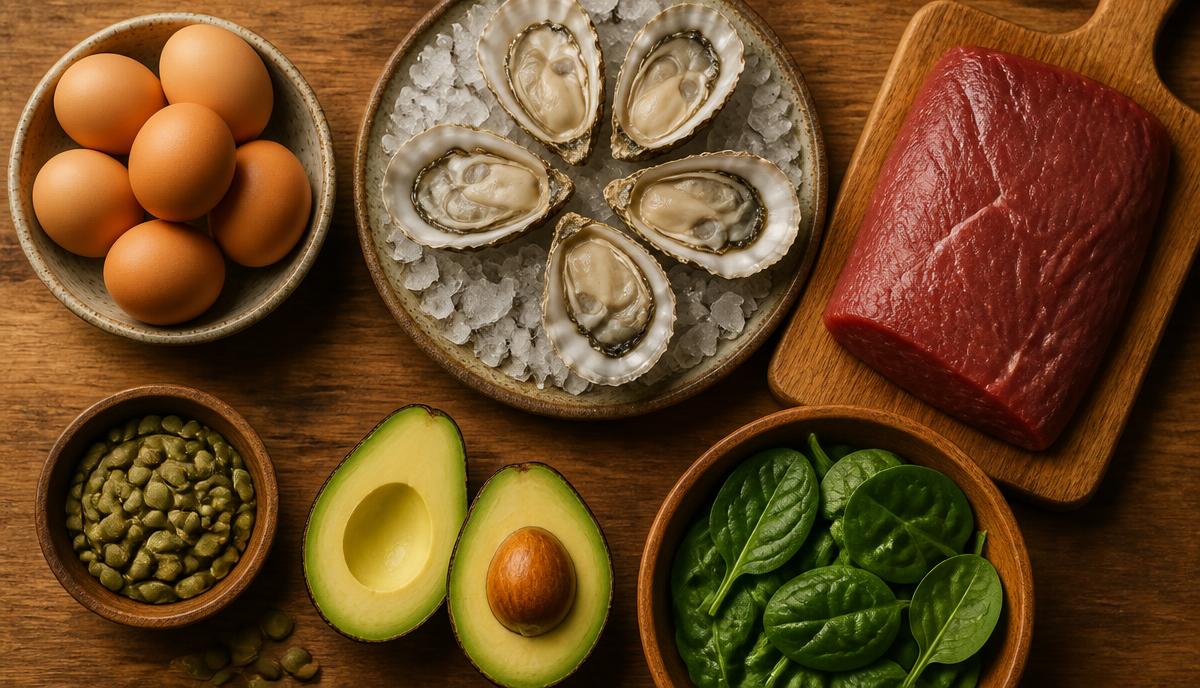
As for testosterone-boosting foods: a good diet matters, but no single food transforms production. Oysters and shellfish, eggs, beef, pumpkin seeds and avocado are examples of foods carrying nutrients your body and hormones need.
Rather than thinking of these as foods that directly raise testosterone, think of them as nutrient-dense foods that make it easier to provide your body with what it needs for normal hormone production.
| Food | Useful nutrients | What the evidence really means |
|---|---|---|
| Oysters and shellfish | Zinc, protein | Excellent zinc sources; most relevant if zinc intake is inadequate |
| Fatty fish | Vitamin D, protein, omega-3 fats | Excellent nutritional choice, but not a proven direct testosterone booster |
| Eggs | Protein, fat, vitamin D, zinc | Nutrient-dense and easy to include; no evidence they dramatically raise testosterone |
| Beef and other meats | Zinc, protein, iron, B vitamins | Useful source of highly bioavailable zinc |
| Milk, yogurt and cheese | Protein, zinc, calcium, sometimes vitamin D | Convenient way to improve nutrient intake |
| Pumpkin seeds | Magnesium, zinc, healthy fats | Particularly useful plant-based mineral source |
| Beans and lentils | Magnesium, zinc, protein, fiber | Good plant-based option |
| Nuts | Magnesium, healthy fats, protein | Nutrient-dense addition to an overall healthy diet |
| Leafy greens | Magnesium and other micronutrients | Helpful for nutritional adequacy rather than as a direct booster |
| Olive oil and avocado | Mostly unsaturated fats | Useful sources of dietary fat within a balanced diet |
6. Reduce heavy alcohol consumption
Evidence: Moderate
Alcohol and testosterone have a dose-dependent, complicated relationship. A review of the evidence found low-to-moderate acute intake can sometimes raise measured testosterone briefly, while large amounts and chronic excessive drinking are associated with reduced production. A meta-analysis of more than 10,000 participants also found alcohol consumption associated overall with lower total and free testosterone.
This does not mean an occasional drinker must quit to optimise hormones. But if your intake is high, cutting back is a sensible health move that may also remove a suppressing factor. And if you don't drink, there is no testosterone-related reason to start.
What about stress?
Chronic stress shows up on every optimisation list, and the biology is plausible: prolonged stress affects sleep, recovery, eating behaviour, training quality and several hormonal systems.
What is far less certain is whether adding meditation or another stress-reduction technique directly and meaningfully raises testosterone in otherwise healthy men.
Natural testosterone optimisation: what matters most?
For most men, the priorities look roughly like this.
| Strategy | Likely usefulness | Important limitation |
|---|---|---|
| Lose excess fat if overweight or obese | High | Not appropriate if you are already lean |
| Get adequate sleep | Moderate to high | More sleep does not endlessly increase testosterone |
| Regular exercise | High for health; mixed for resting T | Workout spikes are not the same as a higher baseline |
| Avoid chronic energy deficiency | Moderate to high if at risk | Overweight men may still benefit from a controlled deficit |
| Correct genuine nutrient deficiencies | Moderate when deficient | Megadosing does not equal higher testosterone |
| Reduce heavy alcohol intake | Moderate | There is no established “perfect” intake for testosterone |
| Testosterone-booster supplements | Usually low | Evidence is weak or inconsistent for most products |
The common theme is simple: fix something that is actually wrong before adding something exotic.
What doesn't reliably boost testosterone?
Cold showers. There is no convincing clinical evidence that routine cold showers produce a meaningful sustained increase. Use them if you enjoy them — not as hormone therapy.
Semen retention or “NoFap”. Sexual activity produces short-term hormonal fluctuations, but there is no good evidence that avoiding ejaculation causes a clinically meaningful long-term increase.
One magic food. Nothing on a plate overrides your energy balance, body composition, sleep, health and nutritional status.
High-fat diets. An older meta-analysis suggested lower-fat diets might reduce testosterone, but a larger 2025 meta-analysis of randomised trials found no significant difference between lower-fat and higher-fat diets, with limited certainty of evidence. Deliberately eating very high fat to “boost T” is hard to justify.
Megadoses of vitamin D or zinc. Correcting a deficiency and taking excessive supplements are two different things. More is not automatically better.
When to see a doctor
Lifestyle optimisation has limits. Talk to a healthcare professional if you have persistent symptoms that concern you, particularly several at once. Symptoms sometimes attributed to testosterone deficiency have many other causes, so symptoms alone cannot diagnose anything. The Endocrine Society recommends confirming suspected hypogonadism with repeat, appropriately timed testosterone measurements alongside compatible symptoms or signs.
A clinician may look for reversible contributors such as
- obesity
- medications
- opioid use
- corticosteroid use
- sleep disorders
- pituitary problems
- testicular disorders
- chronic diseases
Do not stop prescription medication because it might affect testosterone — discuss it with whoever prescribed it.
And if fertility matters to you, say so before considering testosterone therapy. The Endocrine Society recommends against starting testosterone therapy in men planning fertility in the near future, because exogenous testosterone interferes with sperm production.
Bottom line
You can sometimes increase testosterone naturally, but the biggest improvements come from removing something that is suppressing normal production. For many men that means losing excess body fat, sleeping adequately, training, eating enough to recover, correcting genuine deficiencies and not drinking heavily.
None of that should be sold as a guaranteed hack. And if you are already healthy, active, rested, well fed and at a good body composition, your natural testosterone may already sit close to where your physiology wants it. At that point, money spent on “boosters” is unlikely to beat good habits — and persistent symptoms deserve proper medical evaluation rather than an ever-larger supplement stack.
Frequently asked questions
What is the fastest natural way to increase testosterone?
There is no universal fast method. If excess body fat is suppressing testosterone, sustained weight loss has some of the strongest evidence for improving levels. If sleep deprivation or severe energy restriction is the problem, correcting those may also help.
Can lifting weights increase testosterone?
Resistance exercise can temporarily raise testosterone after training, but the evidence does not show large permanent increases in resting testosterone in healthy men. Its effects on muscle, body composition, metabolic health and fitness still make it worthwhile.
What vitamins increase testosterone?
No vitamin reliably increases testosterone in everyone. Correcting a genuine deficiency may help restore normal function. Zinc deficiency appears particularly relevant, while recent randomised-trial evidence has not shown a clear testosterone increase from vitamin D supplementation overall.
Can you double testosterone naturally?
For a healthy man with normal testosterone, doubling it through lifestyle change is unrealistic. Larger changes are more plausible when testosterone is being suppressed by a reversible factor such as substantial obesity or severe energy deficiency.
Do testosterone boosters work?
Most ingredients marketed as testosterone boosters have weak, inconsistent or population-specific evidence. Systematic reviews have found that most proposed boosters do not reliably increase total testosterone.
Sources
- Endocrine Society — Statement on Testosterone Replacement Therapy, July 2026
- Endocrine Society — Testosterone Therapy in Men With Hypogonadism: Clinical Practice Guideline
- Corona et al. — Body weight loss reverts obesity-associated hypogonadotropic hypogonadism: systematic review and meta-analysis
- Leproult & Van Cauter — Effect of one week of sleep restriction on testosterone levels in young healthy men
- Liu et al. — Partial and total sleep deprivation and serum testosterone: systematic review and meta-analysis
- Potter et al. — Exercise training and resting testosterone concentrations: systematic review and meta-analysis
- Smith et al. — Calorie restriction and testosterone concentrations in men: systematic review and meta-analysis
- Te et al. — Serum zinc and testosterone: systematic review
- Paez-Allendes et al. — Vitamin D supplementation and testosterone: 2026 systematic review and meta-analysis
- NIH Office of Dietary Supplements — Zinc Fact Sheet for Health Professionals
- Testosterone boosters and serum testosterone — systematic review
- U.S. Food and Drug Administration — Caution: Bodybuilding Products Can Be Risky
This article is general information, not medical advice. If you have persistent symptoms, or you are considering testosterone therapy, speak with a qualified clinician.
Train the muscles most men ignore
Our free 30-day kegel trainer takes a few minutes a day and supports erection quality and ejaculatory control.
Start Day 1