Diaphragmatic Breathing for Pelvic Floor Relaxation
7 min read
The diaphragm and the pelvic floor sit at opposite ends of the abdominal cavity, but they belong to the same pressure-management system. When you inhale, the diaphragm contracts and moves downward, the abdominal cavity changes shape and the pelvic floor generally allows a small downward movement or lengthening. Pelvic-floor therapists use slow diaphragmatic breathing to help men notice tension and practise letting the pelvic floor go. The important word is help: breathing is a coordination tool, not a cure-all for pelvic-floor disorders.
Quick answer
- During a relaxed inhale the diaphragm descends, the lower ribs and abdomen expand, and the pelvic floor tends to lengthen.
- Instead of squeezing, allow the perineum and anal area to soften as you breathe in.
- On the exhale, let the air leave without forcefully clenching.
- This is commonly used in pelvic rehabilitation for overactive muscles.
- Breathing exercises are not a proven replacement for pelvic-floor strengthening when true weakness or leakage is the problem.
Diaphragmatic breathing can be used to practise pelvic-floor relaxation and coordination. Interpret the evidence carefully: it supports awareness and relaxation, not strengthening. Free Kegel Trainer for Men.
What Is Diaphragmatic Breathing?
Diaphragmatic breathing emphasises movement of the diaphragm rather than shallow upper-chest breathing.
During a relaxed inhale the diaphragm descends, the lower rib cage expands and the abdomen can gently expand. During exhalation the diaphragm returns upward and the abdomen moves back inward.
Cleveland Clinic describes diaphragmatic breathing as a deliberate technique for improving use of the diaphragm and promoting slower, more efficient breathing and relaxation.
How Breathing and the Pelvic Floor Work Together
The pelvic floor does not stay motionless while you breathe. A review of pelvic-floor and respiratory biomechanics describes the pelvic-floor muscles as generally relaxing and lengthening during inspiration, then becoming more active during expiration.
Dynamic MRI research has similarly shown the diaphragm and pelvic floor moving downward during inspiration and upward during expiration.
Most of that detailed research has historically involved women, but male-specific evidence now exists. A 2023 study using ultrasound, pressure measurements and electromyography in ten healthy men found respiratory-related changes in male pelvic-floor muscle length, with the urethrovesical junction descending during inspiration and elevating during expiration in most participants.
That provides a physiological basis for using inhalation as a cue for pelvic-floor release.
How to Do Diaphragmatic Breathing for Pelvic Floor Relaxation
Step by step
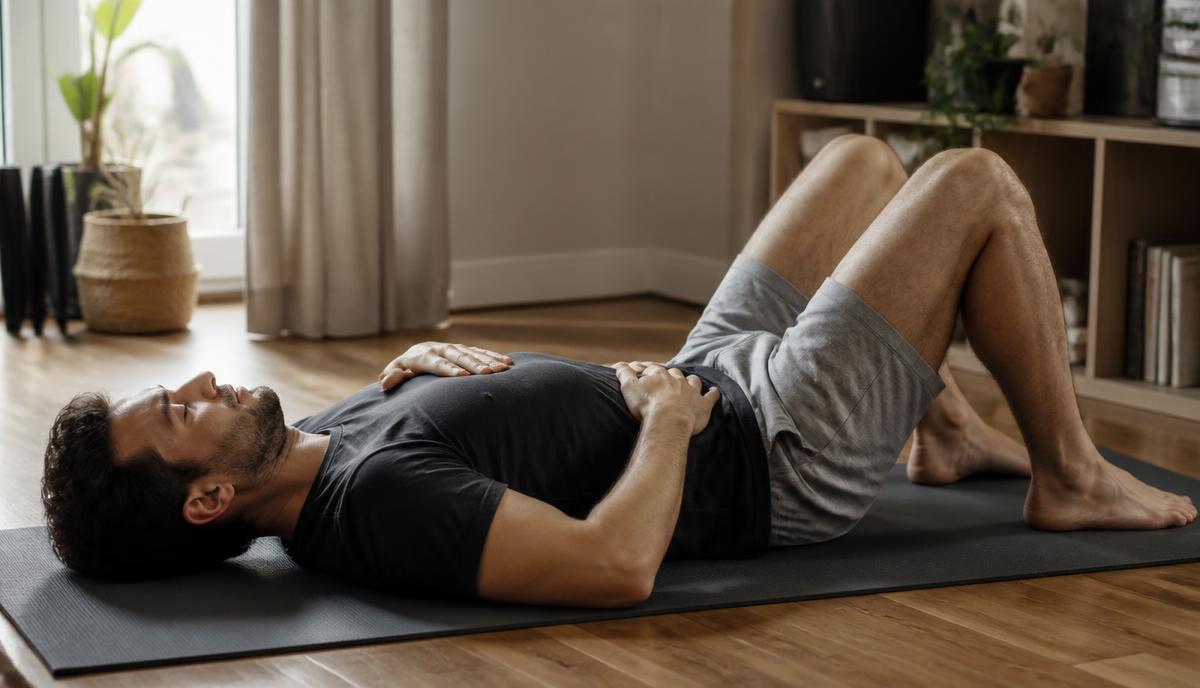
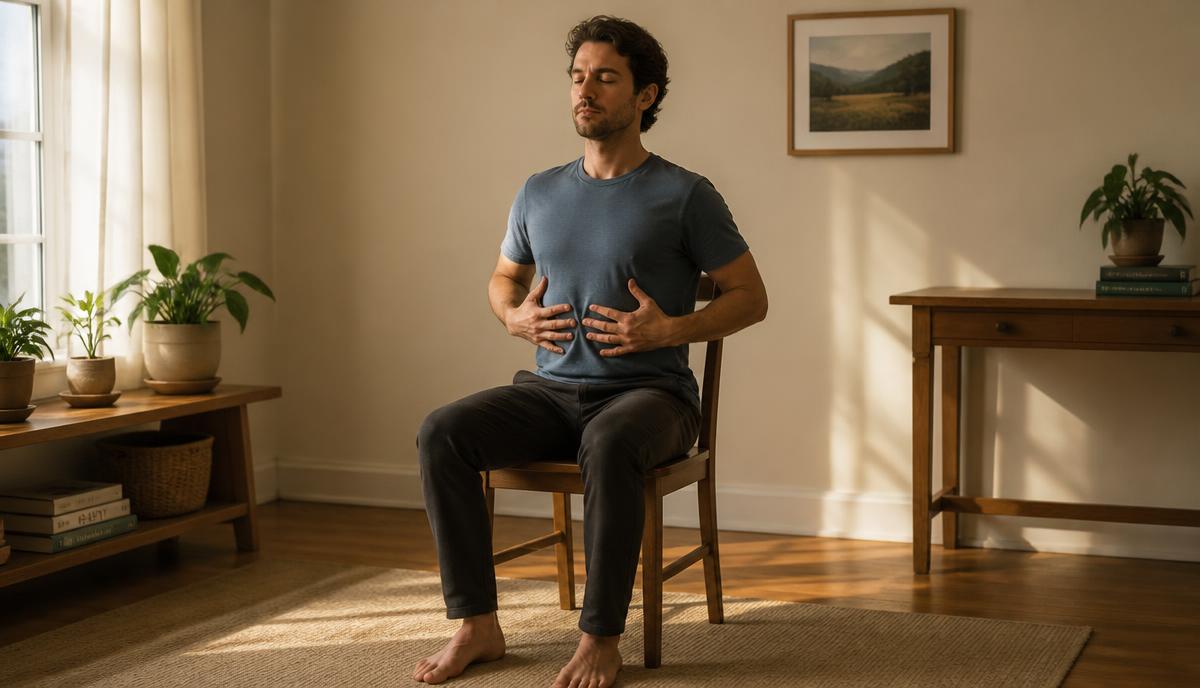
- Choose an easy position: lying on your back with knees bent, or sitting comfortably with your feet supported. The goal is to remove unnecessary effort.
- Relax your jaw, shoulders and abdomen. Do not brace your stomach; allow it to move.
- Place one hand on your chest and one on your abdomen. This is optional but useful when learning: you want to feel expansion lower down rather than only lifting the shoulders.
- Inhale slowly through your nose and allow the lower ribs to widen, the abdomen to expand gently and the pelvic floor to soften. Do not force your belly outward.
- Allow the pelvic floor to descend. Imagine the area between the sit bones gently widening. Cues such as 'let go', 'soften' or 'drop' help some men. The movement should be subtle.
- Exhale slowly and let the air leave without force. For a relaxation session you do not need to squeeze the pelvic floor on every exhale.
- Repeat calmly. Quality matters more than a predetermined number of repetitions. If you feel dizzy, return to normal breathing instead of taking increasingly large breaths.
What Should You Feel?
The correct sensation is usually mild. You may notice:
- abdominal expansion
- lower-rib expansion
- less gripping around the anus
- reduced perineal tension
- a slight downward pelvic-floor movement
You should not feel that you are straining hard, as though forcing a bowel movement. That is bearing down, not relaxation.
Diaphragmatic Breathing vs Reverse Kegel
They are closely related but not identical. In diaphragmatic breathing the primary action is the breathing pattern itself. In a reverse Kegel the primary intention is active pelvic-floor release or lengthening.
You can combine them by allowing the pelvic floor to release during a diaphragmatic inhale. See our guide to the reverse Kegel for the relaxation exercise itself.
| Diaphragmatic breathing | Reverse Kegel | |
|---|---|---|
| Primary focus | Breathing pattern | Pelvic-floor release |
| Main cue | Lower ribs and abdomen expand | Perineum lengthens and softens |
| Typical use | Awareness, calming, coordination | Targeted relaxation training |
| Can be combined? | Yes, release on the inhale | Yes, paired with slow breathing |
When Is Pelvic-Floor Relaxation Breathing Used?
It is most relevant when relaxation is part of the treatment goal. Examples may include:
- pelvic-floor overactivity
- difficulty relaxing the pelvic floor
- pelvic-floor myalgia
- some chronic pelvic-pain presentations
- learning normal pelvic-floor coordination
Cleveland Clinic's pelvic-health rehabilitation program specifically lists relaxation techniques and diaphragmatic breathing among treatments used for pelvic pain and incontinence rehabilitation.
For the condition itself, see our article on the tight pelvic floor.
What Does the Evidence Actually Show?
This is where pelvic-floor content online often becomes too confident. What is reasonably supported: the pelvic floor and diaphragm clearly interact biomechanically during breathing, and breathing-based relaxation is used clinically as part of pelvic rehabilitation.
What is less certain: there is limited high-quality male-specific evidence showing that diaphragmatic breathing by itself treats a particular male pelvic-floor disorder.
A 2023 systematic review evaluating breathing exercises for pelvic-floor outcomes concluded that evidence for using breathing exercises instead of, or in addition to, pelvic-floor muscle training for urinary incontinence and pelvic-organ prolapse was scant, and the available trials were predominantly in women.
That finding matters. If your pelvic floor is genuinely weak, breathing deeply should not be sold as an equivalent substitute for evidence-based strengthening.
Diaphragmatic Breathing for a Tight Pelvic Floor
For a tight or overactive pelvic floor the goal is different from strengthening. You are using breathing to practise muscle awareness, reduced guarding, pelvic-floor lengthening, coordination and relaxation.
A recent narrative review of pelvic physical therapy for male sexual disorders similarly describes abdominal or diaphragmatic breathing as one method used to facilitate relaxation when pelvic-floor muscle tone is increased.
This should still be part of an individualised approach if your symptoms are significant.
Common Mistakes
- Taking enormous breaths. A diaphragmatic breath does not need to be maximal - slow and comfortable is better.
- Pushing the pelvic floor downward. Relaxation is not the same as bearing down.
- Forcing your belly outward. Allow expansion instead of manufacturing it.
- Clenching on every exhale. If the goal is learning relaxation, adding a maximal Kegel undermines the exercise.
- Assuming breathing fixes weakness. Breathing and strengthening serve different purposes - see our guide to the weak pelvic floor if leakage or reduced strength is the main issue.
- Ignoring persistent symptoms. Breathing exercises should not delay assessment of significant urinary, bowel, sexual or pain symptoms.
A Simple 2-Minute Relaxation Practice
- Lie or sit comfortably.
- Relax your jaw and shoulders.
- Take a gentle breath through your nose.
- Allow the lower ribs and abdomen to expand.
- Imagine the pelvic floor softening during the inhale.
- Exhale slowly without squeezing.
- Pause comfortably, then repeat.
The two-minute duration is a practical starting format rather than a medically proven therapeutic dose. The goal is to learn what a relaxed pelvic floor actually feels like.
When to See a Healthcare Professional
Consider professional assessment if:
- pelvic pain persists
- breathing exercises worsen symptoms
- you cannot urinate normally
- you have painful ejaculation
- constipation or incomplete emptying persists
- you cannot distinguish relaxation from straining
- you are unsure whether your pelvic floor is tight or weak
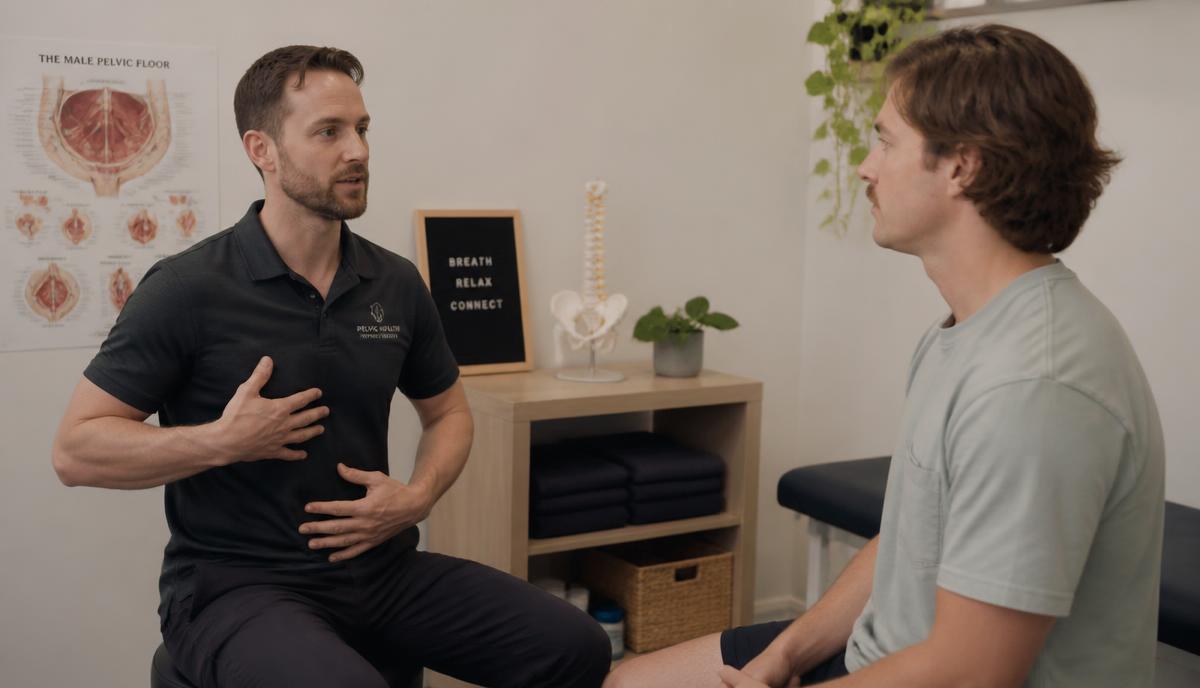
A pelvic-floor physical therapist can determine whether breathing should be combined with manual treatment, mobility work, biofeedback, strengthening or other interventions.
Frequently asked questions
Does diaphragmatic breathing relax the pelvic floor?
Normal inhalation is associated with pelvic-floor lengthening and downward movement, so diaphragmatic breathing can be used as a cue for relaxation.
Should the pelvic floor drop when I inhale?
In healthy breathing patterns it generally descends with inspiration, although individual movement varies.
How long should I practise?
There is no validated male pelvic-floor relaxation dosage. Short, comfortable sessions focused on technique are a reasonable starting point.
Is diaphragmatic breathing the same as a reverse Kegel?
No. Breathing is the respiratory technique; a reverse Kegel adds deliberate pelvic-floor relaxation.
Can diaphragmatic breathing replace Kegels?
Not when the treatment goal is strengthening a genuinely weak pelvic floor. Evidence does not support breathing exercises as a universal substitute for pelvic-floor muscle training.
Train the muscle behind control
The Free Kegel Trainer guides you through squeeze and release intervals, day by day.
Start Day 1Sources
- Cleveland Clinic - Diaphragmatic Breathing
- Cleveland Clinic - Pelvic Health Rehabilitation
- PubMed - Pelvic Floor Muscle Length Changes With Breathing in Males (2023)
- PubMed - Breathing, (S)Training and the Pelvic Floor
- PubMed - Can You Breathe Yourself to a Better Pelvic Floor? Systematic Review
- International Journal of Impotence Research - Pelvic Physical Therapy for Male Sexual Disorders
More Sexual Health articles
Medical disclaimer: This article is educational and not medical advice. Speak to a doctor or pelvic floor physiotherapist about persistent pelvic pain or urinary symptoms.