How to Maintain an Erection
8 min read
Getting an erection and keeping one are related problems, but they are not the same problem. An erection stays firm as long as sexual stimulation keeps the signalling going, blood keeps entering the erectile tissue and the veins that drain it stay compressed. If arousal drops, blood flow changes or the erectile mechanism is impaired, firmness fades. Losing an erection while changing position, putting on a condom or pausing is not automatically a disorder — the useful question is whether it happens often enough to get in the way of sex. This guide is about staying hard after the erection has already arrived.

Quick answer
- Keep sexual stimulation and arousal going — erections naturally rise and fall during sex.
- Slow down if you start mentally checking whether you are still hard.
- Reduce performance pressure and talk to your partner rather than rushing.
- Limit heavy drinking before sex.
- Work on cardiovascular risk factors, smoking and inactivity over weeks and months.
- Review medication if the problem started after a new drug or a dose change.
- Persistent difficulty keeping an erection is a core symptom of ED and deserves evaluation.
If you can get hard but keep losing it: keep stimulation going, stop monitoring your own firmness, ease off alcohol, look after your blood vessels, and review medication. A persistent pattern is worth a medical assessment. Free Kegel Trainer for Men.
Why erections sometimes fade
An erection is a dynamic physiological state, not a structure that locks into place. During arousal, smooth muscle in the corpora cavernosa relaxes, blood flow rises, and the expanding erectile tissue compresses the veins that normally drain the penis.
Anything that interferes with that process can let an erection soften.
- Reduced stimulation or arousal
- Anxiety
- Distraction
- Alcohol
- Vascular problems
- Neurological problems
- Medication effects
- Hormonal problems
- Structural problems affecting the erectile tissue
Persistent difficulty keeping an erection is also one of the characteristic symptoms of erectile dysfunction, which is why a recurring pattern is worth taking seriously.
1. Keep arousal going
A common misconception is that once you are erect, the erection should stay unchanged no matter what happens next. That is not how erections work. Sexual stimulation drives the nerve signalling that keeps the vascular changes in place.
If you tend to lose firmness during transitions
- Keep touching or stimulation going.
- Avoid unnecessarily long pauses.
- Choose positions and activities you actually find arousing.
- Go back to foreplay if firmness drops.
- Do not read a temporary softening as failure.
A partially softer erection can very often come back to full firmness once arousal increases again.
2. Stop constantly checking your erection
One of the fastest ways to pull attention away from arousal is to keep asking yourself: am I still hard? The first sign of reduced firmness triggers anxiety, and anxiety makes you monitor even more closely.
Stress, anxiety and other emotional factors can cause or worsen erectile difficulty. Instead of treating firmness as a score, put attention back on physical sensation, your partner, normal breathing, stimulation and pleasure.

If anxiety is a recurring part of the pattern, a dedicated approach to performance anxiety usually helps more than sexual technique.
3. Do not rush because you are afraid of losing it
Some men respond to inconsistent erections by trying to get to penetration as fast as possible. That normally adds pressure rather than removing it.
Sex does not need to follow a rigid sequence of erection, immediate penetration and continuous maximum hardness. Letting the erection build through sustained arousal — and accepting that firmness fluctuates — often makes maintenance easier when anxiety is a contributor.
4. Limit heavy drinking before sex
If losing erections mainly happens after drinking, run the simple comparison: have sex with little or no alcohol and see whether the result differs. That one test gives you more useful information than any supplement.
5. Improve cardiovascular health
When erections fade consistently rather than only in specific situations, the underlying problem may be physiological. ED and cardiovascular disease share risk factors.
- Diabetes
- High blood pressure
- High cholesterol
- Obesity
- Smoking
- Inactivity
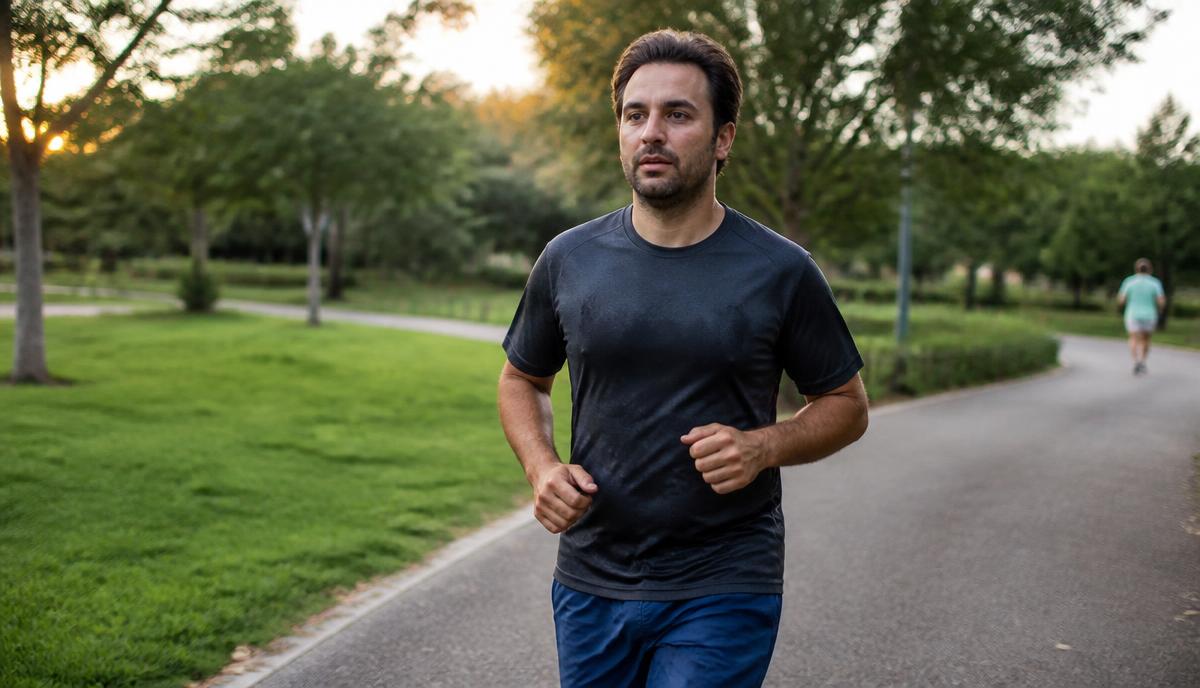
Cardiovascular work will not change tonight's erection, but it addresses one of the most important foundations of erectile function.
6. Stop smoking
Smoking impairs vascular health and is associated with ED. When erection maintenance is limited by blood vessel function, improving the vessels matters far more than trying increasingly elaborate sexual techniques.
7. Review your medications
Tell your clinician if the problem started after
- Beginning a new medication
- Increasing a dose
- Switching medications
Never stop essential medication on your own.
8. Consider medical treatment if the problem is persistent
PDE5 inhibitors such as sildenafil and tadalafil improve the erectile response by enhancing penile blood flow. Major urological guidelines recommend them as first-line therapy for appropriate patients.
A doctor can also assess whether another option fits better. NIDDK lists further treatments:
- Vacuum erection devices
- Injectable medications
- Urethral medication
- Penile implants in selected cases
Treatment should target the underlying pattern rather than simply trying to hold an erection at any cost.
What if you lose your erection putting on a condom?
This happens because stimulation pauses, attention shifts, or anxiety spikes. Rather than treating it as proof of ED, change the logistics.
- Have the condom within easy reach.
- Keep physical contact while putting it on.
- Let your partner help if that feels comfortable.
- Resume stimulation if firmness drops.
- Do not race against the erection.
If it only happens with condoms and erections are otherwise reliable, the context is probably the issue. If you lose erections across many situations, a broader erectile-health evaluation makes more sense.
What if you lose your erection during position changes?
Some softening during a pause is normal, because stimulation drops. Shorten the transition and keep contact. The distinction that matters is whether firmness returns with stimulation, or the erection repeatedly disappears despite strong arousal — the second pattern is more suggestive of an erectile-function problem worth discussing with a clinician.
| Pattern | More likely explanation |
|---|---|
| Softens in a pause, returns with stimulation | Normal arousal fluctuation |
| Fades only in specific situations or with a new partner | Anxiety or context |
| Fades reliably after drinking | Alcohol |
| Started after a new medication | Medication effect |
| Fades everywhere, including alone, and is getting worse | Possible organic ED — get assessed |
Does a “venous leak” cause erections to disappear?
The erectile mechanism normally restricts venous outflow by compressing veins against the tunica albuginea, and problems with that veno-occlusive mechanism can contribute to organic ED.
But losing an erection does not automatically mean you have a venous leak — erections fade for many reasons. Specialised evaluation, sometimes including penile ultrasound, is what settles it. Do not self-diagnose from erection duration alone.
What about cock rings?
A constriction ring reduces venous outflow and is used as part of some vacuum erection devices; NIDDK describes the elastic ring as the component that helps maintain the erection after blood has been drawn into the penis.
Used according to instructions they can help. They are not a substitute for medical evaluation when erection loss is persistent.
When losing an erection may suggest ED
Erectile dysfunction covers persistent difficulty getting an erection, maintaining one, or reaching enough rigidity for sexual activity. A one-off experience is different from a recurring pattern.
Consider evaluation if you repeatedly
- Become erect but lose firmness before penetration
- Lose erections shortly after penetration
- Need increasingly intense stimulation to stay hard
- Cannot regain the erection once it fades
- Have weaker erections both alone and with a partner
- Have noticed a sustained deterioration over time
When to see a healthcare professional
Talk with a healthcare professional if maintaining an erection has become a recurring problem, particularly if any of the following apply.
- You have diabetes
- You have high blood pressure or high cholesterol
- You smoke
- Erection quality has deteriorated gradually
- Libido has also changed significantly
- You take medication that may affect sexual function
- You have penile pain or curvature
- The problem began after surgery or pelvic injury
Because vascular ED can precede clinically obvious cardiovascular disease, persistent erection problems can justify an assessment of cardiovascular risk as well.
Frequently asked questions
Why can I get hard but not stay hard?
Common explanations include fluctuating arousal, performance anxiety, alcohol, medication effects, and physical conditions affecting vascular or neurological erectile function. Often more than one at the same time.
Is it normal to lose an erection during sex occasionally?
Yes. Temporary loss of firmness happens to most men. A persistent, recurring pattern that interferes with sex is what raises concern for erectile dysfunction.
How do I stay hard when changing positions?
Keep stimulation and physical contact going, keep the transition short, and avoid treating temporary softening as a failure — it usually returns as arousal builds again.
Why do I lose my erection right before penetration?
Performance anxiety and an abrupt change in stimulation are frequent contributors, but repeated difficulty at that moment can also occur with medical ED.
Can ED medication help me maintain an erection?
PDE5 inhibitors can improve both achieving and maintaining erections in appropriate patients. They require medical assessment, particularly if you have cardiovascular disease or use nitrate medication.
How can I maintain an erection without pills?
Sustained stimulation, less self-monitoring, lower performance pressure, less alcohol, not smoking, and cardiovascular fitness are the non-drug levers with the best support. If those are in place and the problem persists, get evaluated.
Train the muscle behind control
The Free Kegel Trainer guides you through squeeze and release intervals, day by day.
Start Day 1Sources
- NIDDK — Symptoms & Causes of Erectile Dysfunction
- NIDDK — Treatment for Erectile Dysfunction
- NIDDK — Diagnosis of Erectile Dysfunction
- EAU Guidelines — Management of Erectile Dysfunction
- PubMed — Normal erectile function
- PubMed — Effect of aerobic exercise on erectile function
- Princeton IV Consensus Guidelines
- Mayo Clinic — Erectile dysfunction: symptoms and causes
More Sexual Health articles
Medical disclaimer: This article is educational and not medical advice. Speak to a doctor or pelvic floor physiotherapist about persistent pelvic pain or urinary symptoms.