Male Pelvic Floor: Anatomy, Function and Why It Matters
9 min read
The male pelvic floor is easy to ignore because most of it sits inside the body. Yet these muscles are involved every time you hold urine, pass a bowel movement, cough, lift something heavy, get an erection or ejaculate. Rather than being a single “PC muscle”, the pelvic floor is a coordinated system of muscles, connective tissue, nerves and sphincters spanning the bottom of the pelvis. Anatomical imaging research shows that the levator ani, urethral sphincter, anal sphincter and perineal muscles work together instead of functioning as isolated muscles. The important point: a good pelvic floor is not simply a strong pelvic floor. It also has to relax and lengthen when needed.
Quick answer
- The male pelvic floor is a network of muscles and connective tissue forming the bottom of the pelvis.
- It helps control urination and bowel movements, supports the pelvic organs and contributes to sexual function.
- A healthy pelvic floor must be able to contract, relax and coordinate at the right time — not just squeeze hard.
- Problems can involve muscles that are too weak, too tight, poorly coordinated, or a combination of these.
- Kegel exercises may help some men, especially when weakness is present, but repeatedly strengthening an already tight pelvic floor can be the wrong move.
- Persistent pelvic pain, urinary, bowel or sexual symptoms deserve professional assessment rather than self-diagnosis.
The pelvic floor is the muscular base of the pelvis. It needs strength, relaxation and timing — which is why “do more Kegels” is not a universal answer. Free Kegel Trainer for Men.
What is the male pelvic floor?
The pelvic floor forms the muscular base of the pelvis. It stretches broadly between the pubic bone at the front, the coccyx and sacrum toward the back, and structures on either side of the pelvis.
The bladder, prostate and rectum sit above or interact closely with this muscular system, and the urethra and anal canal pass through structures associated with it.
Key structures involved
- Levator ani group — including the puborectalis, pubococcygeus and iliococcygeus.
- External urethral sphincter — contributes to urinary control.
- External anal sphincter — contributes to bowel control.
- Bulbospongiosus and ischiocavernosus — perineal muscles linked to erection and ejaculation.
This is why calling the entire male pelvic floor “the PC muscle” is an oversimplification: the pubococcygeus is one part of a much larger system.
Helps control urination
Pelvic floor muscles contribute to urinary continence by helping control the urethra and supporting the structures involved in bladder control. They can contract when pressure suddenly rises — coughing, sneezing, lifting — and relax appropriately when you urinate.
Men often become aware of this function after prostate surgery, when continence mechanisms have been disrupted. Pelvic floor muscle training is widely used in rehabilitation after radical prostatectomy, and systematic reviews support benefits for recovery of postoperative urinary continence, although programs and results vary between studies.
Helps control the bowel
The pelvic floor and anal sphincters help hold stool and gas until it is appropriate to pass them. Just as importantly, parts of the pelvic floor need to relax and coordinate during a bowel movement.
A pelvic floor that cannot relax properly may therefore cause difficulty emptying rather than leakage. That distinction matters: constipation and incomplete evacuation do not automatically mean the muscles need strengthening.
Contributes to erections and ejaculation
Several male pelvic-floor muscles are associated with sexual function. The bulbospongiosus and ischiocavernosus interact with penile structures and participate in erection and ejaculation, and reviews have found relationships between pelvic-floor function, erectile function, ejaculation and male pelvic pain.
Pelvic floor muscle training has shown potential benefits for some men with erectile dysfunction or premature ejaculation, but the evidence is heterogeneous and no single optimal protocol has been established. It should not be presented as a guaranteed treatment for sexual problems.
For erection-specific information, see our guide to getting harder erections and improving erection quality.
Supports the pelvic organs and manages pressure
The pelvic floor provides a muscular foundation underneath the pelvic organs. It also helps manage changes in pressure inside the abdomen during everyday activities such as coughing, lifting and breathing.
Works together with breathing and the core
Your diaphragm, abdominal wall and pelvic floor do not function independently. Research using imaging and physiological measurements suggests the pelvic floor changes position and muscle length during breathing. In a small study of healthy men, pelvic-floor landmarks generally descended during inspiration and elevated during expiration, although the pattern was not identical in every participant.
This relationship is one reason breathing techniques are so often built into pelvic-floor rehabilitation: slow nasal breathing into the lower ribs and belly gives the pelvic floor a rhythm of loading and releasing instead of constant bracing.
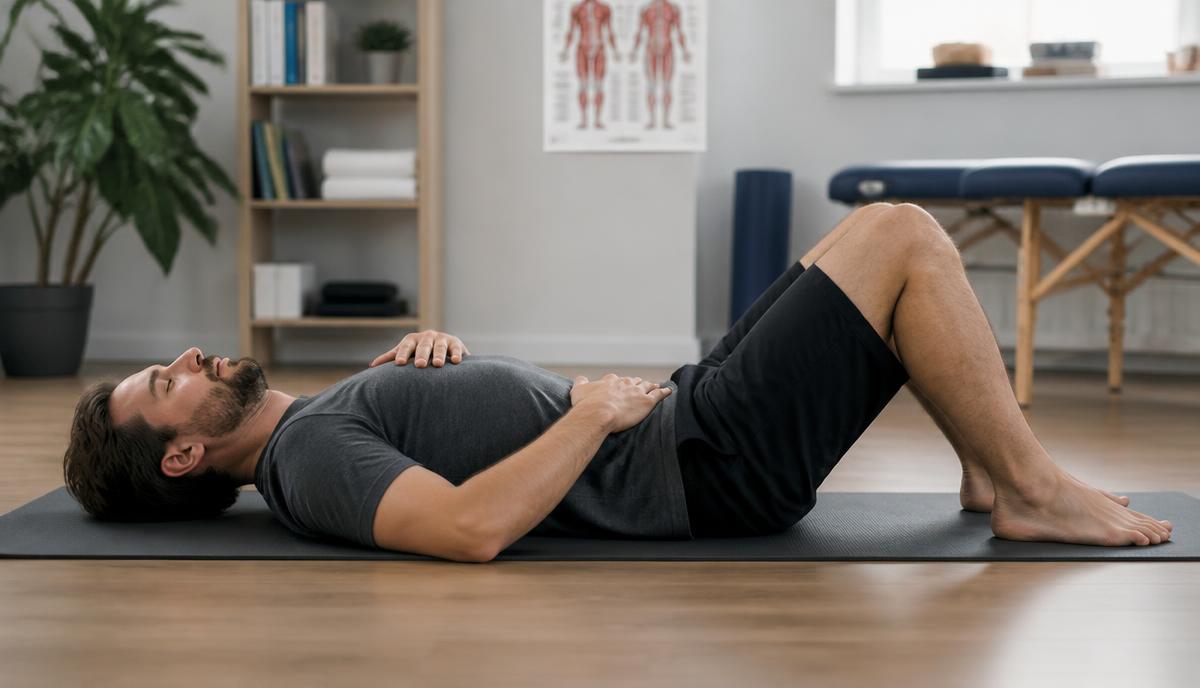
A healthy pelvic floor needs strength AND relaxation
Think of a hand. A useful hand can make a strong fist, but it can also open fully. A hand that stays clenched all day is not functioning normally simply because it is “strong”. The same principle applies to the pelvic floor.
Healthy pelvic floor muscles can
- contract
- sustain appropriate tension
- relax
- lengthen
- respond quickly
- coordinate with breathing and movement
Cleveland Clinic notes that pelvic-floor muscles can be either excessively weak or excessively tight, and both situations may create symptoms. This is why “do more Kegels” is not a universal pelvic-floor solution.
Weak vs tight pelvic floor
A weak or underactive pelvic floor has reduced ability to generate or sustain force. Depending on the individual, that may contribute to urine leakage, bowel leakage, poor pressure control, or problems following prostate surgery.
A tight or overactive (hypertonic) pelvic floor stays excessively contracted or struggles to relax appropriately. Cleveland Clinic describes this as a state in which the muscles cannot adequately relax and coordinate normal urinary, bowel and sexual functions.
| Pattern | Typical symptoms | General direction of treatment |
|---|---|---|
| Weak / underactive | Urine or bowel leakage, poor control with coughing or lifting, post-prostatectomy incontinence | Progressive strengthening and endurance work, often with professional guidance |
| Tight / overactive | Pelvic or perineal pain, hesitant urine stream, urgency or frequency, constipation, painful ejaculation | Down-training: breathing, relaxation, stretching, manual therapy |
| Poor coordination | Difficulty emptying bladder or bowel, leaking despite decent strength | Timing and coordination training, sometimes biofeedback |
| Tight and weak together | Mixed pain and control problems, quick fatigue | Usually release and coordination first, strength added later |
Yes, a pelvic floor can be both tight and weak. Strength, resting tension, endurance and coordination are different properties: a muscle can spend too much time contracted and still generate poor useful force or fatigue quickly. That is one reason symptoms alone cannot always tell you what is happening.
What is pelvic floor dysfunction?
Pelvic floor dysfunction is broader than simple weakness. It describes problems with how the muscles function or coordinate during activities such as urination, bowel movements and general movement.
Depending on the problem, treatment may involve strengthening, relaxation, coordination training, biofeedback, manual therapy, or treatment of another underlying condition entirely.
Should men do Kegel exercises?
Kegels are voluntary contractions of the pelvic floor, designed primarily to train its ability to contract. They can be useful when strengthening is appropriate. The U.S. National Institute of Diabetes and Digestive and Kidney Diseases describes Kegels as pelvic floor muscle training used for bladder and bowel-control problems, and notes that men can use them as well as women.
But strengthening is only one part of pelvic-floor health. Men with significant pelvic pain or an overactive pelvic floor may instead need to focus first on relaxation and coordination. Read our plain-English guide to Kegel exercises for men before assuming that more contractions are what your pelvic floor needs.
How to support male pelvic floor health
There is no single routine every man needs. A sensible general approach looks like this:
- Avoid chronic constipation and excessive straining.
- Do not repeatedly stop your urine stream as an exercise. It can occasionally help you identify the muscles, but routine stop-start urination is generally discouraged.
- Breathe during lifting rather than habitually holding your breath.
- Learn both contraction and relaxation, not just squeezing.
- Use strengthening when weakness is actually the problem.
- Address persistent pelvic pain rather than training through it.
- Consider pelvic-floor physical therapy when symptoms are complex or persistent.
When to see a healthcare professional
Seek medical assessment if you have ongoing:
- pelvic, penile, testicular or perineal pain
- painful ejaculation
- urinary leakage
- difficulty urinating
- urinary urgency or frequency
- recurrent constipation or difficulty emptying your bowel
- bowel leakage
- sexual dysfunction accompanied by pelvic symptoms
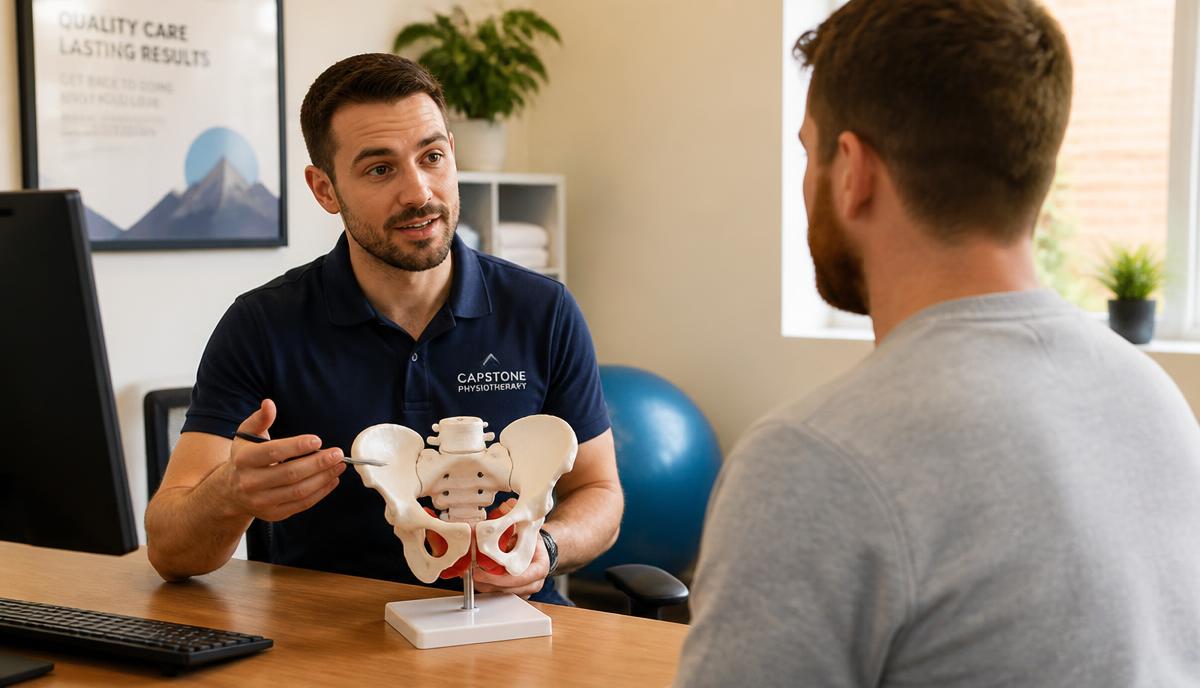
Pelvic-floor symptoms overlap with urinary, prostate, bowel, neurological and musculoskeletal conditions, so a pelvic-floor explanation should not be assumed without evaluation.
Seek urgent medical care for an inability to urinate, significant blood in the urine, fever with severe urinary or pelvic symptoms, or sudden neurological symptoms involving bladder or bowel control.
Frequently asked questions
Where is the male pelvic floor?
It forms the muscular bottom of the pelvis, broadly extending from the pubic region toward the coccyx and between the sides of the pelvis.
Is the male pelvic floor the same as the PC muscle?
No. The pubococcygeus is one component associated with the pelvic floor, but the male pelvic floor includes multiple muscles and supporting structures, including the levator ani group, sphincters and perineal muscles.
Does the pelvic floor affect erections?
Pelvic-floor muscles participate in male sexual function and interact with erection and ejaculation, but erectile dysfunction can have many vascular, neurological, hormonal, psychological and medication-related causes.
Do all men need Kegels?
No. Kegels can be useful when strengthening is appropriate, but a tight or overactive pelvic floor may require a different approach focused on relaxation and coordination.
Can pelvic floor problems cause pelvic pain?
Yes. Pelvic-floor overactivity and myofascial pain are recognised contributors in some men with chronic pelvic pain. Current European urology guidelines recommend addressing pelvic-floor overactivity and myofascial trigger points when relevant.
How do I know if my pelvic floor is tight or weak?
Symptoms give hints — leakage suggests weakness, pain and hesitancy suggest overactivity — but the two can coexist. An assessment by a pelvic-floor physiotherapist or urologist is the reliable way to find out.
Train the muscle behind control
The Free Kegel Trainer guides you through squeeze and release intervals, day by day.
Start Day 1Sources
- Cleveland Clinic — Pelvic floor muscles: anatomy, function and conditions
- NIDDK — Kegel exercises
- RadioGraphics — MRI of the male pelvic floor
- PubMed — Pelvic floor muscle length changes with breathing in males
- PubMed — The role of pelvic floor muscles in male sexual dysfunction and pelvic pain
- EAU — Guidelines on chronic pelvic pain
More Sexual Health articles
Medical disclaimer: This article is educational and not medical advice. Speak to a doctor or pelvic floor physiotherapist about persistent pelvic pain or urinary symptoms.